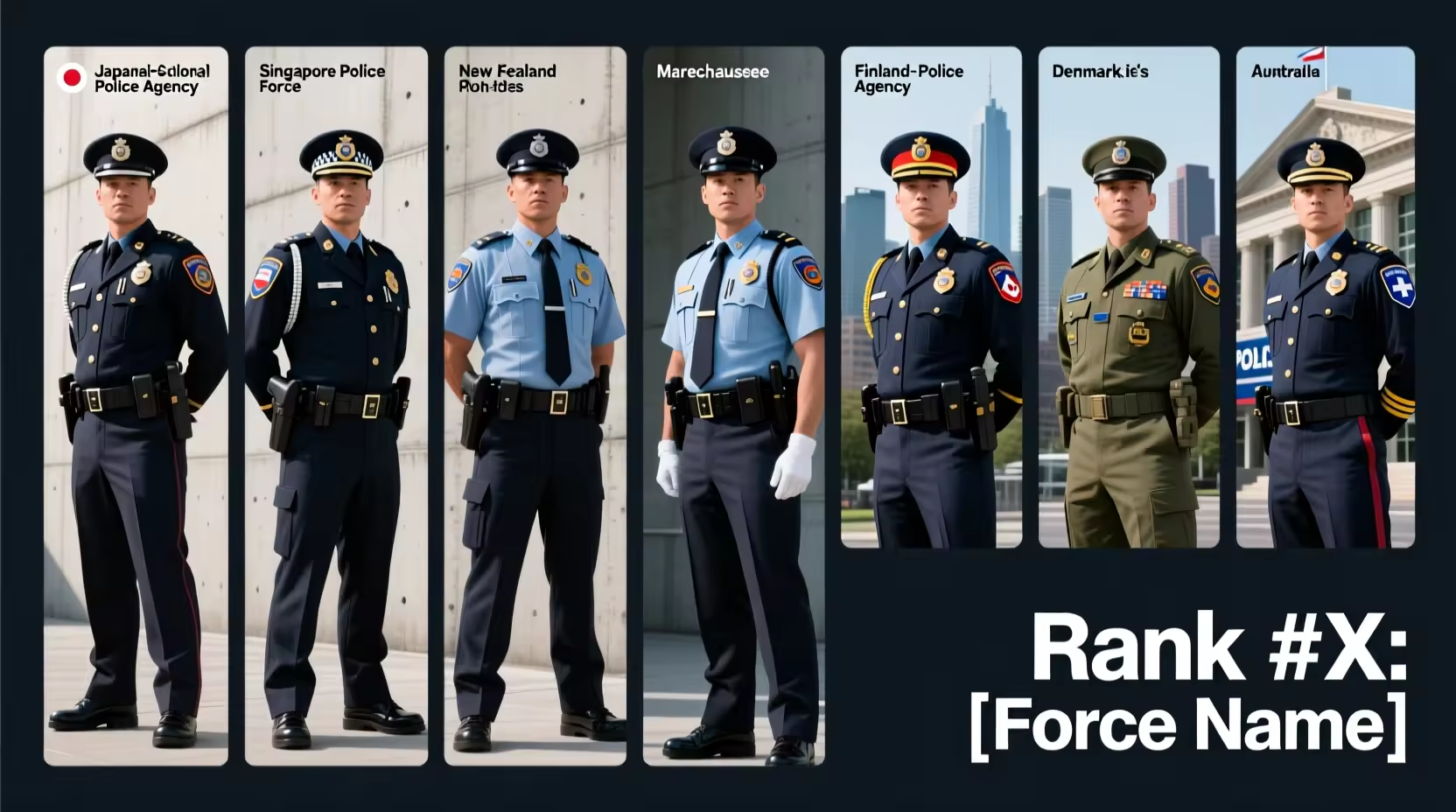
A Look at the Most Unique Police Forces Around the World – When we think about police forces, most of us imagine officers in standard uniforms, patrol cars, and familiar procedures. However, law enforcement looks very different depending on where you are in the world. Culture, geography, religion, politics, and history all shape how police operate. From unarmed officers to religious patrol units and even robot assistants, some police forces stand out as truly unique.
In this article, we take a closer look at some of the most unique police forces around the world and explore what makes them different. If you are interested in global law enforcement systems, international policing styles, or unusual police units, this overview will give you a fresh perspective.
Japan’s Community-Based Policing System
One of the most respected and distinctive systems can be found in Japan. The country’s law enforcement agency, the National Police Agency, oversees policing nationwide, but what truly sets Japan apart is its strong community-based approach.
The Koban System
In cities and neighborhoods across Japan, you will find small police boxes called koban. These compact stations are often located near train stations, busy intersections, and residential areas. Officers stationed in koban are deeply involved in the local community. They provide directions, help lost children, assist elderly residents, and even offer advice on everyday concerns.
This system creates a strong bond between the police and the public. Officers regularly patrol on foot or by bicycle, allowing them to build relationships and maintain visibility. As a result, Japan consistently ranks among countries with low crime rates. The koban model is often studied by other nations looking to improve community policing strategies.
The Vatican’s Swiss Guard
When discussing unique police or security forces, it is impossible to ignore the Pontifical Swiss Guard in Vatican City. Technically a military unit rather than a traditional police force, the Swiss Guard is responsible for the safety of the Pope and the Apostolic Palace.
Founded in 1506, the Swiss Guard is famous for its colorful Renaissance-style uniforms. While the attire may look ceremonial, the guards are highly trained professionals. They undergo rigorous military preparation in Switzerland before serving in Vatican City.
The combination of centuries-old tradition and modern security training makes the Swiss Guard one of the most recognizable and unique protective forces in the world. It reflects how history and religion can shape law enforcement structures in small sovereign states.
Iceland’s Unarmed Police Force
In contrast to heavily armed police units in many countries, Iceland is known for having mostly unarmed police officers. The national force, the Icelandic Police, typically patrols without firearms.
Officers do have access to weapons in certain situations, but it is not standard practice to carry guns on daily patrol. This approach reflects Iceland’s low crime rate and relatively small population. Violent crime is rare, and trust between citizens and law enforcement is generally high.
Iceland’s policing model often becomes part of the global conversation about police reform and alternatives to militarized law enforcement. It demonstrates how societal conditions and crime levels influence how police are equipped and trained.
Dubai’s High-Tech Police Innovations
When it comes to innovation and futuristic policing, Dubai in the United Arab Emirates stands out. The Dubai Police Force is famous for integrating advanced technology into everyday operations.
The force has introduced smart police stations, robotic officers, and even luxury supercars into its fleet. These high-end vehicles are not just for show; they are used for community outreach and tourism hotspots. Dubai Police also use artificial intelligence and smart surveillance systems to improve response times and crime prevention.
This focus on technology aligns with Dubai’s broader vision of becoming a global smart city. As other countries explore digital transformation in law enforcement, Dubai often serves as a case study in tech-driven policing.
Religious Police in Saudi Arabia
In some parts of the world, policing extends beyond crime prevention into enforcing religious or moral codes. In Saudi Arabia, the Committee for the Promotion of Virtue and the Prevention of Vice, commonly known as the religious police, has historically played a significant role in public life.
This organization was tasked with ensuring compliance with Islamic moral standards, including dress codes and prayer attendance. In recent years, reforms have reduced its authority, but its existence highlights how religion can directly influence law enforcement structures.
Saudi Arabia’s model shows how policing can vary dramatically depending on cultural and religious contexts. It also illustrates how legal systems evolve over time in response to social and political changes.
Canada’s Mounted Police Tradition
Few police forces are as iconic as the Royal Canadian Mounted Police in Canada. Known as the RCMP, this federal police force is famous for its red serge uniforms and mounted patrols.
While modern RCMP officers use advanced investigative techniques and technology, the mounted tradition remains a powerful symbol of Canada’s history. Originally established to maintain order in the western territories during the 19th century, the RCMP played a major role in shaping the country’s development.
Today, the RCMP provides federal policing services and also acts as the provincial police in several regions. Its blend of historical symbolism and contemporary policing makes it one of the most unique and recognizable forces in the world.
Brazil’s Environmental Police Units
In a country known for its vast rainforests and biodiversity, it makes sense that environmental protection would be a priority. In Brazil, specialized environmental police units work to combat illegal logging, wildlife trafficking, and environmental crimes.
These units often operate in challenging terrain such as the Amazon rainforest. Officers may travel by boat, helicopter, or on foot to reach remote areas. Their mission goes beyond traditional law enforcement and focuses on preserving natural resources.
As environmental crime becomes a growing global issue, Brazil’s specialized approach highlights the expanding role of police forces in protecting ecosystems and addressing climate-related concerns.
How Culture Shapes Law Enforcement
Looking at these unique police forces around the world, one thing becomes clear: there is no single model of policing. Each country develops its law enforcement system based on its history, values, security needs, and social conditions.
In Japan, community trust drives neighborhood-based policing. In Iceland, low crime rates support an unarmed approach. In Dubai, technology defines the future of law enforcement. In Saudi Arabia, religion has historically influenced police responsibilities. In Canada, tradition and symbolism remain important. In Brazil, environmental protection has become a policing priority.
For anyone researching global policing systems or comparing international law enforcement models, these examples offer valuable insights. They show how police forces are not just institutions of security, but reflections of the societies they serve.