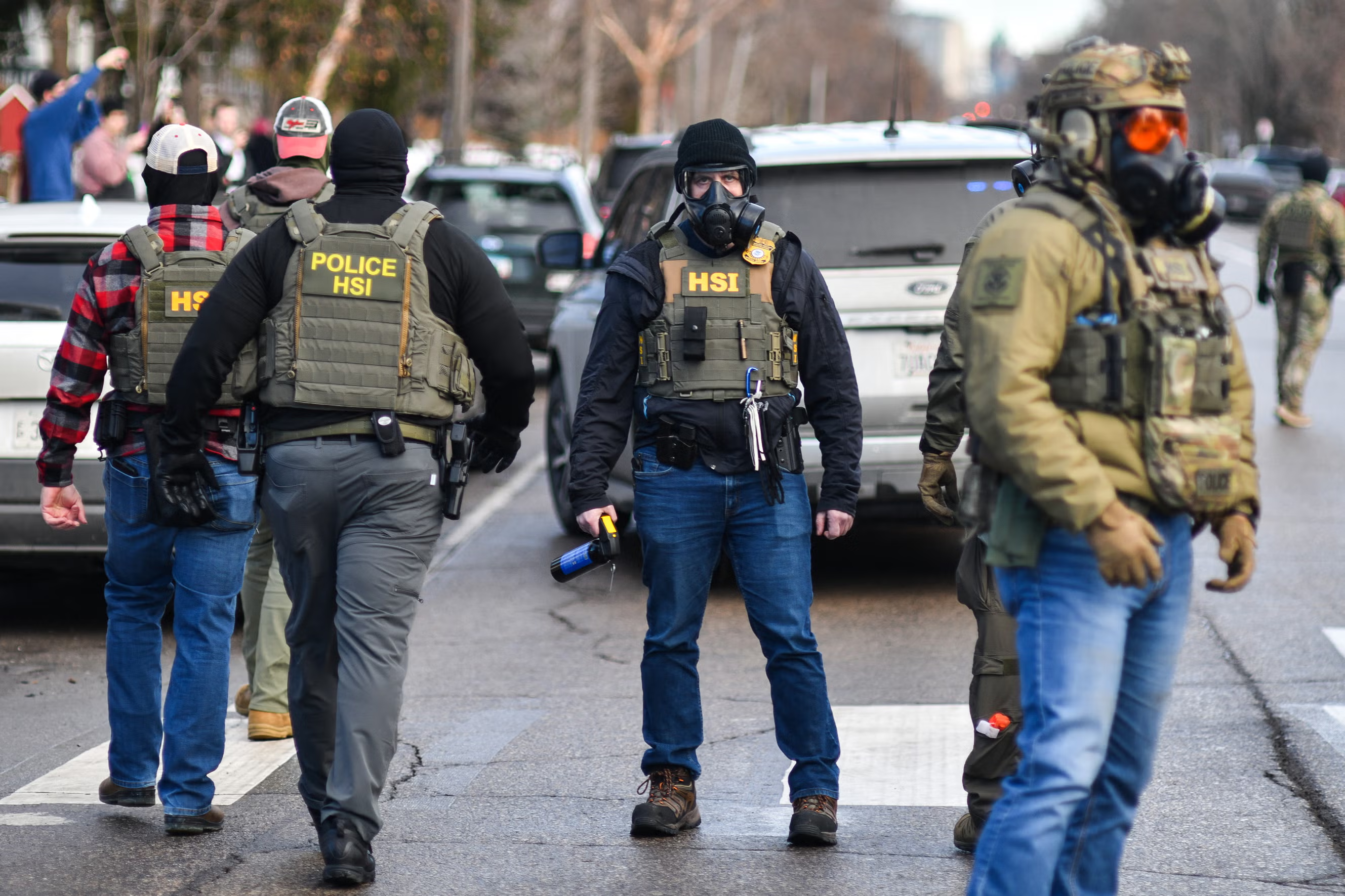
Inside Global Police Forces Power Fear and Untold Stories – Police forces around the world are more than just uniforms and badges. They are institutions of immense power, tasked with enforcing the law, protecting citizens, and maintaining order. Yet beneath the surface lies a complex web of untold stories—moments of bravery, ethical dilemmas, and sometimes fear—that rarely make headlines. Understanding the inner workings of global policing helps shed light on both the human and institutional sides of law enforcement.
The Power of Policing
Policing is fundamentally about power. Police officers wield authority that can shape communities, enforce laws, and even influence politics. In some countries, this power is tightly regulated and highly accountable, while in others, it can be a source of fear and controversy.
The role of police power is multifaceted. On a basic level, it ensures public safety and prevents crime. Officers patrol streets, respond to emergencies, and investigate criminal activity. But beyond these functions, policing carries symbolic weight. The presence of police can reassure citizens, deter wrongdoing, and maintain social order. In authoritarian regimes, however, the same power may be used to suppress dissent or control populations, illustrating how policing authority can be both protective and coercive.
Balancing Authority and Responsibility
Global police forces face the constant challenge of balancing authority with responsibility. Ethical policing requires not just enforcing laws, but doing so fairly and transparently. Many nations have developed rigorous training programs and oversight mechanisms to prevent abuses of power. For example, body cameras, independent review boards, and strict accountability procedures are now common in countries striving for transparency.
Yet the pressure to maintain authority in high-risk situations can sometimes lead to difficult decisions. Officers may confront violent crimes, civil unrest, or emergencies where every choice carries consequences. These moments often form the untold stories of policing—the split-second decisions that test courage, ethics, and human judgment.
Fear and the Police Experience
Fear is an inseparable part of policing, but it manifests differently depending on perspective. For police officers, fear may stem from the dangers of the job—handling armed suspects, managing riots, or responding to emergencies in hostile environments. Nighttime patrols, high-speed pursuits, and undercover operations all involve real risk. Many officers describe the tension of expecting the unexpected, knowing that every call could present life-or-death challenges.
On the other hand, fear can also exist in the communities they serve. In some regions, heavy-handed tactics, corruption, or political influence can make citizens wary of law enforcement. Historical incidents, media coverage, and social inequalities contribute to a perception of police as intimidating rather than protective. This dual experience of fear—inside and outside the force—shapes interactions between police and the public worldwide.
Stories Behind the Badge
Beyond statistics and protocols, the most compelling aspects of policing lie in human stories. Consider officers who have prevented crimes through empathy rather than force, or those who risked their lives to save strangers during disasters. There are also stories of moral struggle—officers confronting internal corruption or navigating orders that challenge their personal ethics.
These narratives are rarely highlighted in mainstream news, yet they form the fabric of global policing. Sharing such stories helps humanize law enforcement, revealing that behind the uniform are individuals confronting the same fears, doubts, and hopes as the communities they serve.
Policing Practices Across the World
Global policing is far from uniform. Different countries have developed systems suited to their legal frameworks, cultural norms, and societal needs. In centralized models like Japan or France, police forces operate under national authority, enabling consistent training, policies, and procedures across regions. Community engagement is often emphasized, with officers acting as both law enforcers and local liaisons.
In contrast, decentralized systems, such as those in the United States or Germany, feature multiple layers of law enforcement—local, state, and federal. While this allows for more localized approaches, it can also create inconsistencies in standards and practices. Developing nations often contend with resource constraints, political influence, and high-risk environments, shaping a very different policing experience.
Special Units and Hidden Roles
Modern police forces are increasingly specialized. Beyond patrol officers, there are units focused on cybercrime, organized crime, counterterrorism, and intelligence. Some officers work undercover for months, navigating dangerous networks to gather evidence without being discovered. Others handle delicate negotiations during hostage situations or large-scale protests. These specialized roles highlight the breadth of police responsibilities, extending far beyond visible patrol duties.
Many of these assignments remain largely invisible to the public, adding layers to the untold stories of policing. The courage, strategy, and mental resilience required in these roles reveal a side of law enforcement rarely captured in news coverage.
Untold Stories of Triumph and Tragedy
The most compelling narratives within police forces often involve moments of both triumph and tragedy. Officers save lives, prevent large-scale incidents, and restore order in chaotic circumstances. Yet they also confront tragedy—facing loss, injury, or situations where justice feels elusive.
For instance, first responders to natural disasters or terrorist attacks often operate under extreme pressure, risking their own safety to protect others. Conversely, officers may experience the emotional toll of confronting violent crime, domestic abuse, or social injustice on a daily basis. These experiences shape law enforcement culture and inform policy, yet they are rarely the focus of mainstream attention.
Myths and Misconceptions
Public perception of police forces is often shaped by myths and stereotypes. Media portrayals can exaggerate either heroism or misconduct, creating an incomplete picture. In reality, police work involves a complex interplay of strategy, human behavior, ethics, and law. Recognizing this complexity helps bridge the gap between public perception and the lived reality of officers.
Understanding these untold stories also emphasizes the importance of reform and accountability. Where misconduct exists, transparency and oversight are essential. Where bravery and service prevail, recognition and support are crucial. Both aspects are vital to shaping effective, trusted policing systems worldwide.
The Future of Policing
The future of global policing will likely focus on transparency, technology, and community engagement. Advances in surveillance, data analysis, and communication are transforming how officers prevent and respond to crime. At the same time, public demand for accountability is shaping reforms in training, ethics, and operational protocols.
Ultimately, the story of policing is one of balance—balancing authority with responsibility, fear with courage, and tradition with innovation. By exploring the untold stories, understanding the human challenges, and learning from global practices, we gain a more nuanced view of what it truly means to police a society.
Policing is more than an institution; it is a reflection of human society itself—powerful, flawed, courageous, and complex. The stories hidden behind the badges remind us that every uniform represents an individual navigating challenges, making choices, and shaping the world in ways both visible and unseen.