
How Police Systems Differ Between North Korea and South Korea
How Police Systems Differ Between North Korea and South Korea | North Korea and South Korea share a historical and cultural background, but their political systems have developed in very different directions. This difference is also reflected in how policing and public security are organized.

Understanding how police systems differ between North Korea and South Korea provides insight into the broader differences between the two states. While South Korea has a modern civilian police system operating under democratic institutions, North Korea’s security structure is closely connected to the country’s centralized political system.
The Police System in South Korea
South Korea has a national police organization responsible for maintaining public safety, preventing crime, investigating offenses, and protecting citizens.
The Korean National Police Agency (KNPA) operates under the country’s legal and administrative framework. Police officers perform familiar law-enforcement functions such as traffic control, criminal investigations, emergency response, and public-order management.
South Korea also has specialized police units that deal with areas such as cybercrime, financial crimes, serious offenses, and international cooperation.
Main Responsibilities of South Korean Police
The South Korean police system covers a broad range of responsibilities, including:
- Preventing and investigating crimes
- Responding to emergencies
- Maintaining public order
- Managing traffic and road safety
- Protecting victims and vulnerable people
- Investigating cybercrime
- Supporting public safety during major events
Because South Korea operates under a constitutional democratic system, policing is formally subject to laws, courts, oversight mechanisms, and established procedures.
The Security System in North Korea
North Korea’s public-security structure is different because policing operates within a highly centralized political and state system.
The country has organizations responsible for public security and internal control, including the Ministry of Public Security. Other state security institutions also play important roles in protecting the political system and monitoring activities considered threats to the state.
As a result, the concept of policing in North Korea extends beyond ordinary crime prevention. State security and political control are major components of the country’s internal-security structure.
Police vs. State Security
One of the most important differences between the two countries is the relationship between ordinary law enforcement and political security.
In South Korea, the police primarily perform civilian law-enforcement functions. State institutions such as intelligence and national-security agencies have separate responsibilities.
In North Korea, the boundaries between public security, political control, and state security are much more closely connected.
This means that North Korea’s security organizations can have responsibilities involving surveillance, political loyalty, internal control, and enforcement of state policies in addition to conventional public-security duties.
Differences in Political Structure
The differences between the two police systems are closely related to the political structures of the two countries.
South Korea is a constitutional democracy with competitive elections, an independent judiciary, a legislature, and multiple institutions that provide oversight of government authority.
North Korea is a highly centralized one-party state led by the Workers’ Party of Korea. Political authority is concentrated within the country’s leadership and party structure.
These different political environments influence the goals, organization, and oversight of security institutions.
How Law Enforcement Works
In South Korea, criminal investigations generally operate within a formal legal framework. Police investigations can lead to prosecution and court proceedings, and citizens have legal rights that are protected by the constitution and criminal-procedure system.
North Korea’s legal and security environment is significantly less transparent. Independent information about everyday policing is limited, making it difficult for outside observers to assess how laws are applied consistently across the country.
Reports from international organizations have also raised concerns about arbitrary detention, political repression, and human-rights violations associated with North Korea’s security apparatus.
Surveillance and Public Control
Surveillance represents another major difference.
South Korea uses surveillance technologies and investigative tools for purposes such as crime prevention and criminal investigations. Their use is subject to laws and institutional controls.
North Korea has a much broader system of social and political monitoring. Citizens can be subject to extensive monitoring intended to maintain political loyalty and control information.
This reflects the broader role of security institutions in maintaining the country’s political system.
How Citizens Experience the Police
For ordinary citizens, interactions with police can therefore be quite different.
In South Korea, people commonly interact with police when reporting crimes, dealing with traffic incidents, requesting emergency assistance, or participating in investigations.
In North Korea, interactions with public-security institutions can involve not only ordinary law enforcement but also enforcement of state regulations and political controls.
Because reliable independent reporting from inside North Korea is limited, individual experiences can vary and are difficult to document comprehensively.
A Simple Comparison
| Category | South Korea | North Korea |
|---|---|---|
| Political system | Constitutional democracy | Highly centralized one-party state |
| Main public police organization | Korean National Police Agency | Ministry of Public Security |
| Primary focus | Civilian law enforcement and public safety | Public security, internal control, and enforcement of state policies |
| Legal environment | Relatively transparent and institutionally regulated | Highly centralized and less transparent |
| Oversight | Courts, government institutions, legislature, and other mechanisms | Strongly connected to the central political system |
| Security structure | More clearly divided among institutions | Multiple security organizations with overlapping internal-control roles |
Why the Difference Matters
Comparing police systems is useful because it shows that law enforcement does not operate independently from a country’s political institutions.
A police organization reflects the laws it enforces, the government structure it operates under, and the rights and oversight mechanisms available to citizens.
South Korea’s police system emphasizes civilian law enforcement within a democratic legal framework. North Korea’s security structure has a broader role in maintaining both public order and the centralized political system.
The police systems of North Korea and South Korea differ significantly because the two countries have developed very different political and legal institutions.
South Korea has a modern civilian police organization focused on crime prevention, investigations, public safety, and law enforcement under constitutional and legal oversight. North Korea, meanwhile, has a broader security structure in which public security is closely connected to political control and the protection of the state system.
Understanding these differences helps explain why the word “police” can represent very different institutions and experiences in the two Koreas.

The Story of Jon Burge and the Chicago Police Torture Controversy
The Story of Jon Burge and the Chicago Police Torture Controversy | The name Jon Burge remains closely associated with one of the darkest controversies in the history of the Chicago Police Department. For years, allegations emerged that Burge and detectives working under his supervision used violent and coercive interrogation techniques against criminal suspects, particularly Black men.

The controversy stretched across nearly two decades, from the early 1970s into the early 1990s. What initially appeared to be a series of individual complaints eventually developed into a major scandal involving allegations of torture, coerced confessions, wrongful convictions, institutional silence, and racial injustice.
The Burge story is important not only because of what allegedly happened inside Chicago police interrogation rooms, but also because of the long struggle that followed to obtain justice for the people who said they had been abused.
Who Was Jon Burge?
Jon Burge joined the Chicago Police Department after serving in the United States military during the Vietnam War. In 1972, he became a detective and was assigned to Area 2 on Chicago’s South Side.
Burge eventually rose through the department and became a commander. During his career, he was involved in investigating serious crimes and supervised other detectives.
His professional reputation changed dramatically as allegations of police abuse began to surface.
Detectives associated with Burge were sometimes referred to as the “Midnight Crew.” Survivors and investigators later described a pattern of aggressive interrogation practices connected to Burge and officers under his command.
Allegations of Torture
The allegations surrounding Burge involved much more than ordinary police questioning.
Former suspects described being beaten, threatened, suffocated, burned, and subjected to electrical shocks. Some also reported being threatened with firearms or subjected to simulated executions.
According to accounts from survivors, these methods were used to pressure suspects into giving statements that investigators wanted.
The alleged purpose was often to obtain a confession or information that could support a criminal prosecution.
The consequences could be devastating. Once a confession entered a criminal case, it could become extremely difficult for a defendant to convince prosecutors, judges, or jurors that the statement had been produced through coercion.
Andrew Wilson and a Turning Point
One of the cases that brought major attention to the controversy involved Andrew Wilson.
Wilson was arrested in 1982 after being accused of killing two Chicago police officers. Following his arrest, he said that detectives had severely abused him during interrogation.
His physical condition after questioning became an important piece of evidence. Medical observations and photographs raised serious questions about what had happened while Wilson was in police custody.
The Wilson case became a turning point because it provided a concrete example around which broader allegations could be investigated.
It also demonstrated the difficulty faced by people who attempted to challenge police conduct after already being convicted.
From Individual Complaints to a Larger Scandal
As additional people came forward, the controversy grew considerably.
More suspects alleged that they had experienced similar treatment during interrogations. The similarities between different accounts raised questions about whether the abuse was the work of isolated individuals or part of a wider culture within certain police units.
Internal investigations eventually identified serious problems in the way suspects had been treated.
The issue therefore expanded beyond Jon Burge himself.
It became necessary to examine the actions of fellow officers, supervisors, prosecutors, and other officials who may have encountered allegations of abuse but failed to respond effectively.
The Racial Dimension
Race was a central element of the Burge controversy.
Most of the people identified as survivors were Black men. The alleged abuse occurred primarily in Chicago neighborhoods with large Black populations.
For many community activists, this made the scandal inseparable from Chicago’s broader history of racial inequality and mistrust between Black communities and law enforcement.
The controversy raised difficult questions about whether racial stereotypes influenced the way suspects were treated and whether complaints from Black defendants received the attention they deserved.
For survivors and their supporters, the scandal represented not simply police brutality but a profound failure of equal justice.
The Problem of Coerced Confessions
One of the most serious consequences of the alleged abuse was the possibility of wrongful convictions.
A confession can carry enormous weight in a criminal investigation. Even when other evidence is weak, investigators and prosecutors may regard a confession as a powerful indication of guilt.
But a statement obtained through threats or physical abuse is fundamentally different from a voluntary confession.
Several people connected to the Burge cases argued that they had confessed to crimes because they believed continued resistance would lead to further violence.
This created a chain of potential injustice:
Police abuse → coerced confession → criminal prosecution → conviction → imprisonment
Once a conviction had been entered, reversing the damage could take years or even decades.
Why Was Accountability So Difficult?
The controversy lasted for years partly because legal and institutional obstacles made prosecution difficult.
Many of the alleged acts occurred long before prosecutors were able to pursue criminal charges. By the time federal authorities brought a case against Burge, the statute of limitations had expired for many of the underlying torture allegations.
This created an unusual legal situation.
Burge was eventually prosecuted for lying about the alleged abuse rather than being federally prosecuted for the torture itself.
The distinction is important because his final criminal conviction did not represent a direct criminal judgment for every act of abuse attributed to him.
Burge Leaves the Police Department
Burge was suspended from the Chicago Police Department in the early 1990s and was ultimately fired in 1993.
His departure did not bring the controversy to an end.
Former suspects continued challenging their convictions. Lawyers examined old interrogation records, activists organized campaigns, and families sought answers about what had happened to their relatives.
The scandal had become larger than the career of one police officer.
It had become a question about how a major city should respond when allegations of serious misconduct involve its own law-enforcement institutions.
The Effect on Death Penalty Cases
The controversy also reached some of the most serious cases in the Illinois criminal justice system.
Several people connected to the Burge cases had received death sentences. Concerns about the reliability of confessions became particularly serious when the ultimate punishment was involved.
In 2003, Illinois Governor George Ryan took extraordinary action concerning the state’s death row, including cases involving people connected to the Burge torture controversy.
These developments helped intensify public discussion about the dangers of relying on confessions obtained under questionable circumstances.
Burge’s Federal Conviction
In 2010, Jon Burge was convicted in federal court of perjury and obstruction of justice.
The charges were connected to statements he had made under oath in a civil proceeding. Burge had denied using or knowing about improper interrogation methods, but prosecutors presented evidence challenging those denials.
His conviction marked an important moment in the long history of the scandal.
Although prosecutors could not pursue many of the original torture allegations because of legal time limits, Burge was still held criminally responsible for lying about the conduct.
Prison and the End of His Career
Burge was sentenced to 54 months in federal prison in 2011.
His imprisonment brought a measure of accountability, but it did not resolve the consequences experienced by the alleged survivors.
Some had lost years of their lives behind bars. Others struggled with damaged reputations, financial hardship, broken family relationships, and the psychological consequences of alleged abuse.
The Burge case therefore continued to exist beyond the courtroom.
The Fight for Reparations
Survivors and activists continued campaigning for official recognition and compensation.
Their efforts eventually contributed to a reparations program approved by the City of Chicago in 2015.
The program represented an important acknowledgment that the consequences of police torture could not be addressed solely through individual criminal prosecutions.
Eligible survivors received financial compensation, while the broader initiative also included educational and community-based elements.
The reparations process demonstrated that accountability can take different forms. A criminal conviction may punish an individual, but reparations can address some of the broader harm experienced by survivors and their communities.
The Role of Survivors and Activists
The Burge scandal remained in public view largely because survivors and their supporters refused to let the issue disappear.
People who had experienced abuse continued telling their stories. Attorneys investigated cases that were decades old. Community organizations organized demonstrations and public campaigns.
Their persistence helped transform the controversy from a collection of old criminal cases into a national discussion about police accountability.
This history also shows why survivors can play an important role in exposing institutional misconduct.
Official investigations may begin a process, but sustained pressure from affected communities can be crucial in keeping that process alive.
Why the Burge Story Still Matters
The Jon Burge controversy continues to matter because it raises fundamental questions about the limits of police authority.
Police officers have significant power when questioning people in custody. That power comes with a responsibility to respect legal rights and human dignity.
When coercion replaces legitimate investigation, the consequences can extend far beyond a single interrogation room.
A coerced confession can influence an entire criminal case. If that confession contributes to a wrongful conviction, the victim may lose years of freedom while the real circumstances of the crime remain unresolved.
The case also demonstrates how institutional failures can make correction extremely difficult.
Lessons From the Chicago Police Torture Scandal
Several important lessons can be drawn from the Burge controversy.
Police Accountability Must Be Independent
Complaints against law-enforcement officers require serious and impartial investigation. Internal loyalty should never take priority over the protection of citizens.
Confessions Must Be Examined Carefully
A confession should not automatically be treated as proof of guilt. Investigators and courts must consider how it was obtained and whether independent evidence supports it.
Wrongful Convictions Have Long-Term Consequences
Even after a conviction is overturned, a person may have lost years of education, employment, relationships, and family life.
Historical Abuse Cannot Simply Be Forgotten
Past misconduct can continue affecting communities long after the original events. Public acknowledgment and education can be important parts of addressing that legacy.
Survivors Deserve Recognition
Justice is not always limited to imprisonment of a perpetrator. Survivors may also need compensation, support, official acknowledgment, and opportunities to tell their stories.
Conclusion
The story of Jon Burge is a deeply troubling chapter in Chicago’s history of policing and criminal justice.
For nearly two decades, Burge and detectives associated with his command were accused of using abusive interrogation practices against numerous suspects, most of them Black men. The resulting controversy raised serious concerns about coerced confessions, wrongful convictions, racial inequality, and institutional accountability.
Burge was eventually removed from the police department and later convicted in federal court for perjury and obstruction of justice. Yet his conviction was only one part of a much longer struggle.
Survivors and their advocates continued fighting for recognition and reparations, demonstrating that the effects of alleged police torture can remain long after the interrogation itself has ended.
The Burge case ultimately serves as a reminder that a justice system must protect not only victims of crime, but also the rights and dignity of people accused of committing those crimes. Without accountability and proper safeguards, the pursuit of justice can itself become a source of profound injustice.
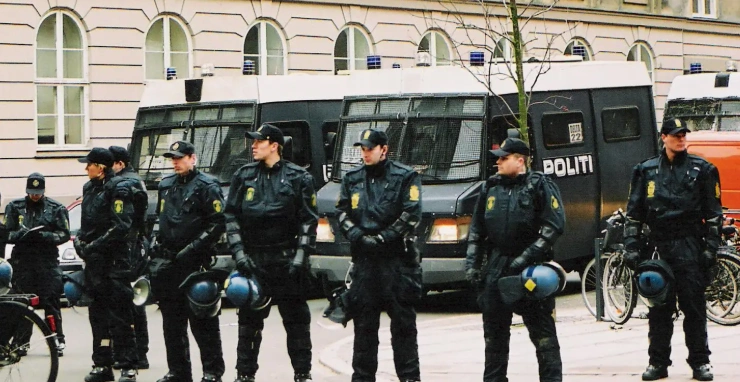
Inside Denmark’s Low-Corruption Police Culture
Inside Denmark’s Low-Corruption Police Culture | Denmark is widely known for its strong institutions, high level of social trust, and relatively low levels of corruption. These characteristics are also reflected in the country’s approach to policing.
For visitors and observers, Denmark’s police culture can appear noticeably different from the image of law enforcement found in many other countries. The relationship between police officers, citizens, and public institutions is shaped by professionalism, accountability, and a strong expectation of trust.
But what makes Denmark’s low-corruption police culture possible?
The answer is not simply strict laws or individual integrity. It is the result of institutional structures, social norms, professional standards, and a broader culture in which public officials are expected to serve the public interest.
What Does Low Corruption Mean in Denmark?
Low corruption does not mean that corruption or misconduct can never occur.
Instead, it describes an environment where bribery, abuse of public office, and improper influence are relatively uncommon and where institutions have mechanisms to identify and address misconduct.
Denmark consistently performs strongly in international assessments of public-sector integrity and corruption perceptions. Transparency International’s Corruption Perceptions Index has regularly placed Denmark among the countries perceived to have the lowest levels of public-sector corruption.
This broader institutional environment matters for policing because police officers operate within the same public-sector culture.
Trust as the Foundation of Danish Policing
One of the most important elements of Denmark’s police culture is public trust.
Police officers depend on cooperation from citizens. People are more likely to report crimes, provide information, follow lawful instructions, and cooperate with investigations when they believe law enforcement institutions are acting fairly.
Trust therefore becomes more than a positive social value. It can also be an important practical tool for effective policing.
When citizens expect police officers to behave professionally and impartially, officers are held to a high standard of conduct.
Professionalism and Public Responsibility
Danish police officers work within a professional framework that emphasizes responsibility and lawful conduct.
Police powers can significantly affect people’s lives. Officers may stop individuals, conduct investigations, make arrests, and use force in specific circumstances.
Because these powers are significant, accountability is essential.
A low-corruption police culture depends on the idea that authority should be exercised according to established rules rather than personal interests.
This distinction is important. A police officer should not be able to use official authority simply because of personal relationships, financial incentives, or social status.
Why Bribery Is Difficult to Normalize
Corruption often becomes easier to sustain when informal payments or personal favors are treated as normal parts of everyday life.
Denmark’s broader social environment makes this difficult to normalize.
Citizens generally expect public services to operate according to formal procedures rather than personal connections. Public officials are expected to make decisions based on their responsibilities, not on private benefits.
This does not eliminate every potential conflict of interest, but it creates a strong social barrier against treating corruption as an ordinary part of public administration.
Transparency and Accountability
Another important feature of Denmark’s institutional culture is the emphasis on transparency and accountability.
Police officers are not completely outside public scrutiny. Their actions can be subject to legal requirements, administrative procedures, complaints, investigations, and oversight.
Accountability is important because even highly trusted institutions can make mistakes.
A healthy police culture therefore does not depend on the assumption that every officer will always make the correct decision. Instead, it creates mechanisms for questioning decisions and addressing misconduct when necessary.
The Role of Danish Institutions
Denmark’s police culture cannot be separated from the country’s wider system of governance.
Strong institutions can reduce opportunities for corruption by creating clear procedures, professional standards, oversight mechanisms, and consequences for misconduct.
This creates an environment where an individual officer has fewer opportunities to turn public authority into private benefit.
In other words, integrity is supported not only by individual character but also by institutional design.
Social Equality and Police-Citizen Relations
Denmark’s relatively egalitarian social culture can also influence how citizens perceive public officials.
In highly hierarchical societies, citizens may feel that certain individuals or groups are entitled to special treatment.
A more egalitarian culture can create a different expectation: public officials are professionals carrying out public responsibilities rather than members of a privileged class.
This does not mean Denmark is completely free from social inequality or disputes about policing. It simply helps explain why the relationship between citizens and public institutions can be shaped by expectations of fairness and equal treatment.
Police Culture Is More Than Individual Integrity
It is tempting to explain low corruption by saying that Danish police officers are simply more honest.
That explanation is too simple.
Individual ethics certainly matter, but sustainable integrity usually depends on multiple layers working together.
These can include:
- Professional recruitment
- Training and ethical standards
- Clear legal procedures
- Internal supervision
- External oversight
- Transparent public institutions
- Accountability mechanisms
- Social expectations against bribery
- Public trust
When these factors reinforce each other, corruption becomes more difficult to normalize and more costly to conceal.
Can Denmark’s Model Be Replicated Elsewhere?
This is one of the most interesting questions surrounding Denmark’s experience.
Other countries can adopt anti-corruption measures, strengthen police oversight, improve professional training, and introduce greater transparency.
However, institutions do not operate in isolation.
A police reform program introduced into a country with weak public institutions, widespread political interference, or deeply established informal networks may produce different results from the same reform introduced in Denmark.
This means Denmark’s experience can provide useful lessons, but it should not necessarily be treated as a simple blueprint.
The Importance of Public Expectations
Police culture is shaped not only from inside police organizations but also by society.
When citizens expect officers to follow the law, reject inappropriate payments, explain their decisions, and treat people fairly, those expectations become part of the environment in which police work.
Public expectations can therefore reinforce institutional rules.
The relationship works in both directions: trustworthy institutions can encourage citizens to trust the police, while a culture of civic responsibility can encourage institutions to maintain high standards.
Challenges Still Exist
A low-corruption environment should never be confused with a perfect system.
Police institutions can still face challenges involving excessive use of force, discrimination, accountability, privacy, or individual misconduct.
Trust also creates an important responsibility. When people place significant confidence in an institution, violations of that trust can have serious consequences.
For that reason, maintaining a low-corruption police culture requires continuous attention rather than assuming that past success guarantees future integrity.
Lessons from Denmark
Denmark’s experience suggests that reducing corruption in policing is not simply about increasing punishment for corrupt officers.
A broader approach may be more effective.
Police officers need clear rules, professional incentives, meaningful oversight, and a workplace culture that treats integrity as part of the profession.
At the same time, citizens need accessible mechanisms for reporting concerns and seeking accountability.
Most importantly, public institutions need to demonstrate through their everyday actions that authority exists to serve the public rather than private interests.
Denmark’s low-corruption police culture is best understood as part of a wider institutional and social environment.
Strong public trust, professional standards, accountability, transparent governance, and social expectations around integrity all contribute to the way policing operates.
The Danish experience demonstrates an important lesson: corruption is not controlled by a single law or policy. It is influenced by the environment in which public officials work.
A police force is more likely to maintain integrity when its officers operate within institutions that reward professionalism, discourage abuse of power, and hold individuals accountable.
For Denmark, that combination has helped create a police culture in which public trust and institutional integrity remain central to the relationship between law enforcement and society.