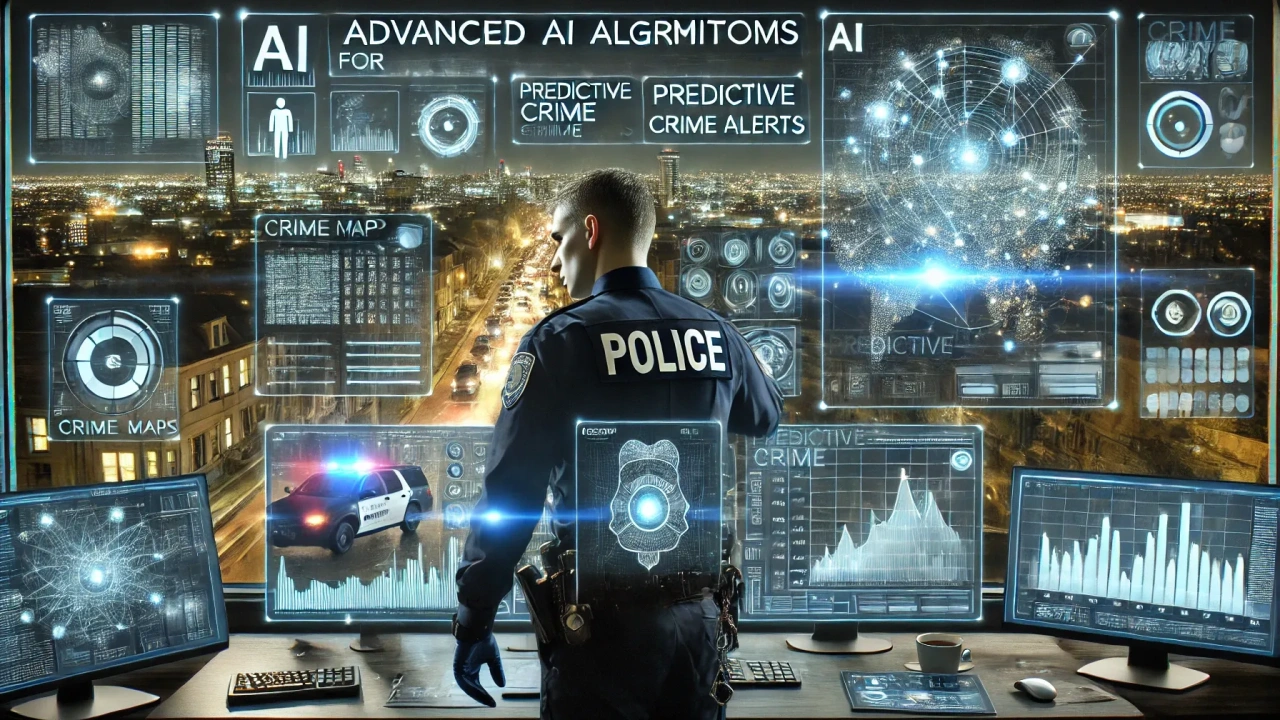
When AI Algorithms Take On Detective Work
When AI Algorithms Take On Detective Work | Law enforcement agencies worldwide are undergoing a significant paradigm shift. Instead of acting only after a crime has occurred (reactive), modern policing now leverages technology to anticipate criminal activity before it happens (proactive). Through Artificial Intelligence (AI) and big data analytics, law enforcement can now optimize their resources with unprecedented efficiency.
How exactly is this technology reshaping police work, and what moral challenges overshadow its implementation? Here is an in-depth look.
The Technological Pillars of Modern Crime Detection

The application of AI in public safety does not rely on a single tool, but rather on a combination of several cutting-edge innovations:
-
Place-Based Analytics: This system operates by dissecting historical crime records, geographic conditions, weather, and community event calendars. Consequently, the AI maps out high-risk “hotspots,” allowing police patrols to be deployed to those locations just in time.
-
Person-Based Analysis: Utilizing specialized algorithms, the system assesses behavioral patterns and past association histories to measure statistical risk. This technology maps out who is most likely to become the next perpetrator or victim of violence.
-
Data Fusion Platforms: This technology integrates various previously fragmented information sources, such as CCTV footage, 911 emergency call audio, and Automated License Plate Readers (ALPRs), making crime patterns instantly recognizable.
-
Natural Language Processing (NLP): With the help of NLP and generative AI, piles of police reports, body camera transcripts, and digital evidence can be cross-referenced and examined in seconds.
-
Real-Time Biometrics: Facial recognition and concealed weapon detectors installed in public spaces help officers identify fugitives or immediate threats live in the field.
Real-World Implementation Across the Globe
No longer just a concept from science fiction, predictive policing is already being utilized by several global security agencies.
In Rio de Janeiro, Brazil, a data analytics platform called CrimeRadar is used to visualize crime risks across the metropolitan area, successfully helping local agencies reduce crime rates. Meanwhile, in the United States, state police departments utilize data fusion platforms to match suspect photos with national databases, cutting investigation times from weeks to mere minutes.
Moving to Europe, the Europol Innovation Lab employs machine learning to track international financial transactions to detect large-scale fraud and dismantle cross-border criminal networks.
The Dark Side of AI: Algorithmic Bias and Privacy Concerns
Despite offering remarkable efficiency, the digitization of law enforcement sparks intense debates regarding human rights and ethics.
The Core Challenge: AI models rely heavily on historical data. If past data shows that a marginalized neighborhood was frequently targeted for arrests, the AI will continually dispatch police back to that area. This creates a feedback loop of over-policing in minority communities.
Furthermore, the accuracy of facial recognition technology remains highly contested. Studies have found higher false-positive rates when scanning faces of people of color, leading to wrongful arrests and violations of civil liberties.
Compounding the issue, the majority of these algorithms are developed by private vendors who keep their source code confidential for proprietary reasons. This lack of transparency makes it difficult for judicial systems to verify the fairness of the technology, triggering global demands—including strict regulatory guidelines from the European Union—to restrict and oversee AI-driven mass surveillance.