Meet the RCMP: Canada’s Iconic National Police Force
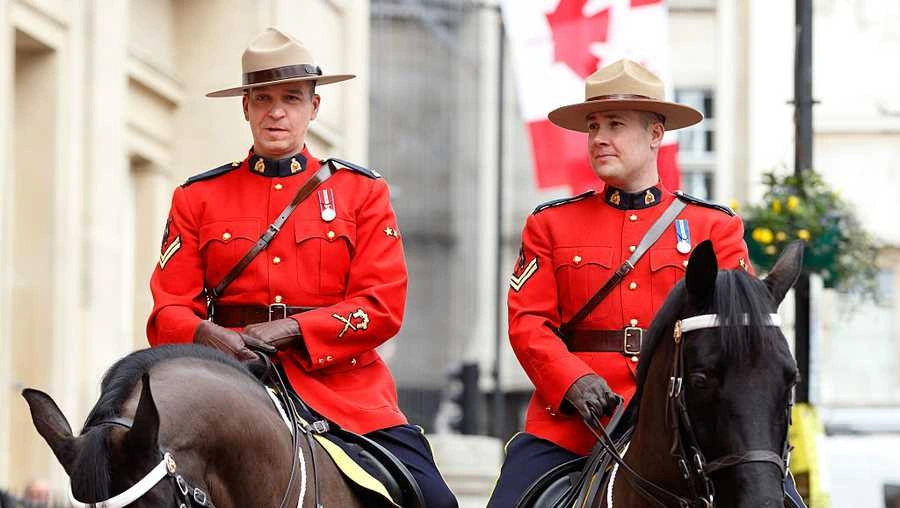
Meet the RCMP: Canada’s Iconic National Police Force | When thinking about national symbols, things like monumental architecture, native wildlife, or flags usually come to mind. However, Canada possesses a highly unique national icon: its very own law enforcement officers. Wearing distinct, vibrant red serge jackets, wide-brimmed brown Stetson hats, and riding majestic black horses, they are the Royal Canadian Mounted Police—more affectionately known worldwide as the Mounties.
Behind their aesthetic ceremonial appearance, which frequently graces tourism postcards, this institution stands as one of the most respected law enforcement agencies in the world. They are far from ordinary street-patrol officers. Their existence is deeply woven into the foundational fabric of Canada, and their responsibilities stretch from bustling urban centers to the freezing, isolated corners of the Arctic.
How did a 19th-century frontier mounted militia transform into a full-fledged, sophisticated modern police force? This article explores the profile, history, and crucial role of the RCMP in securing communities across Canada and the globe.
A Glance Back to 1873: The Birth of the Frontier Guardians
To understand why the RCMP is held in such high regard, we must turn back the clock to 1873. During this era, Canada was a young nation struggling to expand its territory westward. The Canadian West at the time was a wild, lawless frontier, frequently plagued by clashes between illegal whiskey traders, gold prospectors, and Indigenous communities (First Nations).
Recognizing the volatile situation, Canada’s first Prime Minister, Sir John A. Macdonald, decided to establish a specialized paramilitary force named the North-West Mounted Police (NWMP). This very force became the precursor to the RCMP we know today.
Their initial assignment was incredibly specific and challenging: enforce British law across the wild plains, halt the devastating illegal liquor trade within local communities, and foster peaceful relationships with Canada’s Indigenous tribes. Unlike the often repressive military tactics utilized in the American West, the NWMP prioritized diplomacy, impartial justice, and a deep respect for the law.
The success of this force in maintaining peace without mass bloodshed earned them a lasting place in the hearts of Canadians. As the decades passed and various territories joined the confederation, the institution merged with the Dominion Police in 1920, officially becoming the Royal Canadian Mounted Police.
A Unique and Multifunctional Operational Structure
One of the defining features that sets the RCMP apart from police agencies in other nations is its sheer flexibility and vast jurisdiction. In most countries, policing duties are rigidly divided between local (municipal), regional (state/provincial), and national (federal) levels. Canada, however, utilizes a remarkably integrated approach.
The RCMP operates as the national police force while simultaneously executing three primary mandates across different levels of government:
1. The Foundation of Federal Policing
At the highest level, the RCMP holds the reins of Canada’s national security. As a federal agency, they are responsible for investigating complex, large-scale organized crime. This includes dismantling international drug trafficking syndicates, human smuggling rings, financial fraud, and sophisticated cybercrimes in our digital age. Furthermore, their intelligence units work tirelessly to detect and neutralize potential terrorist threats to national sovereignty.
2. Safeguarding Provinces and Municipalities
The true genius of this system lies in its adaptability at the local level. Through specialized contract policing agreements, the RCMP acts as the provincial police force throughout nearly all of Canada, with the exceptions of Ontario and Quebec, which maintain their own independent provincial forces.
This means if you are driving along a highway in Alberta, British Columbia, or Nova Scotia, the officer assisting you at an accident scene is a member of the RCMP. Additionally, hundreds of small towns and urban communities across Canada hire the RCMP to serve as their municipal police department, eliminating the financial burden of establishing standalone local forces.
3. High-Level VIP Protection
The safety of the nation’s leadership rests squarely on the shoulders of this institution. A specialized protective unit within the RCMP is fully responsible for the physical security of the Prime Minister of Canada, the Governor General (the monarch’s representative in Canada), and all cabinet ministers. When foreign heads of state or global dignitaries visit Canadian soil, these elite RCMP personnel establish security perimeters and provide close protection throughout the visit.
Preserving Peace on the International Stage
The contributions of this institution extend far beyond Canadian borders. As part of the global community, the RCMP has built an outstanding reputation through its involvement in international humanitarian and peacekeeping missions.
Since the late 20th century, personnel have been deployed to various conflict zones around the world under the United Nations (UN) flag. Their duties abroad focus heavily on post-conflict reconstruction. Instead of entering combat, these experienced officers are dispatched to train, mentor, and rebuild local police forces in countries recovering from civil war or institutional collapse.
By transferring vital knowledge regarding human rights, modern investigative techniques, and community-policing philosophies, the RCMP has assisted numerous nations in Africa, Asia, and Latin America in establishing fairer, more democratic law enforcement systems.
Living Traditions Amid Modernization
Even though they are a highly sophisticated modern force equipped with advanced patrol vehicles, helicopters, and cutting-edge digital forensics labs, the RCMP has never forgotten its historical roots. The striking contrast between historic tradition and modern policing is exactly what makes them so captivating to the world.
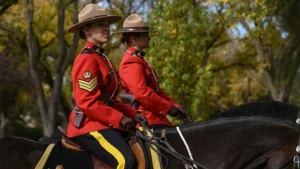
Their legendary dress uniform, known as the Red Serge—a brilliant scarlet wool tunic paired with midnight blue breeches featuring a yellow cavalry stripe—is no longer worn for daily patrols due to practical reasons. However, during formal ceremonies, national parades, or the reception of foreign dignitaries, this uniform is mandatory. The iconic wide-brimmed Stetson hat rests proudly, serving as a reminder of the early eras when their predecessors rode through blinding blizzards to deliver justice.
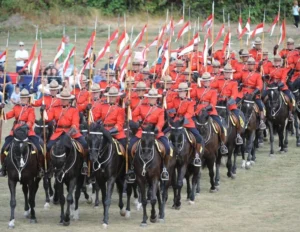
Alongside the uniform, one of the most anticipated cultural traditions globally is The Musical Ride. This is a spectacular display of equestrian skill featuring a full troop of 32 active RCMP officers and their horses. They execute intricate, dynamic choreographies set to music. The performance is far more than mere entertainment; it is a living tribute to the cavalry skills that once allowed the Mounties to navigate and tame the vast Canadian wilderness.
A Cultural Approach: Connecting with Communities
The key to the RCMP’s survival and success for over a century and a half is its profound ability to adapt to the local cultures of the areas they serve. Canada is a massive geographical landscape with incredibly diverse demographics, ranging from multicultural metropolitan hubs to isolated Inuit settlements in the extreme northern territories.
In these remote regions, an RCMP officer often wears many hats. They are not viewed merely as enforcers of the law, but as integral members of the community’s extended family. They attend indigenous community meetings, listen to the wisdom of local elders, and engage heavily in youth outreach programs. This culturally sensitive, inclusive approach has proven highly effective in de-escalating community tensions and fostering mutual trust between citizens and the law.
Naturally, this long journey has not been without its obstacles. Throughout its history, the institution has faced difficult periods regarding internal reforms and public pressure to continually improve social justice for all segments of society. However, their openness to self-evaluation and their willingness to evolve alongside changing times demonstrate the high level of professionalism within the force.
The Royal Canadian Mounted Police serves as a prime example of how a security institution can preserve its rich historical heritage and cultural identity without falling behind the pace of modernization. From a small mounted frontier unit tasked with securing an untamed territory in 1873, they have grown into a multi-tiered, modern powerhouse operating at local, national, and international levels.
The dedication of the Mounties to keeping communities safe by balancing firm law enforcement with a respectful, human-centric approach makes them much more than just a police force. They stand as an enduring symbol of integrity, peace, and national pride woven into the very identity of Canada.